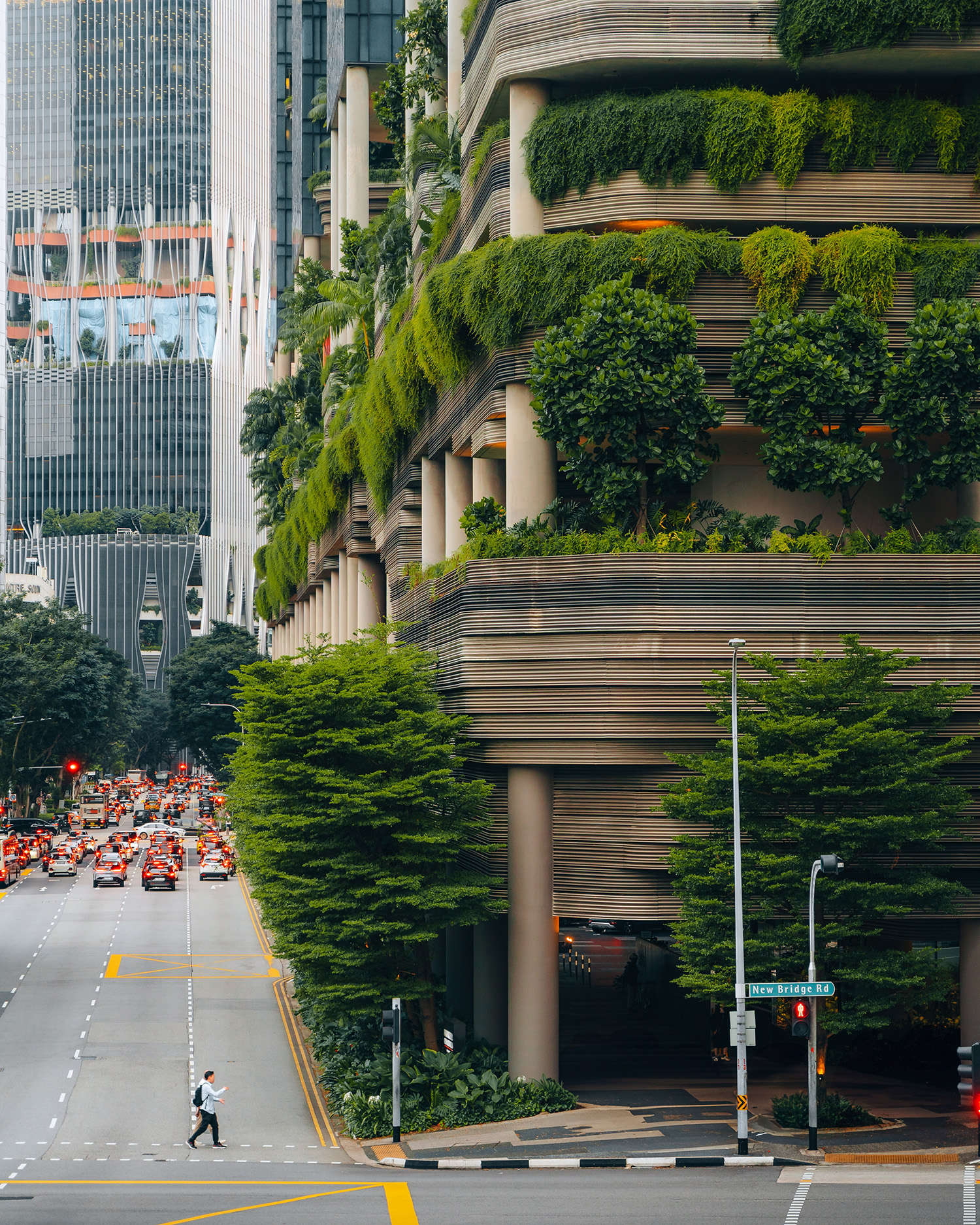



As Australian cities continue to grow, green walls and green roofs are becoming an increasingly popular way to introduce vegetation into high-density developments. For developers and architects, vertical greening offers an opportunity to improve environmental performance, enhance amenity and make better use of limited space while responding to the environmental challenges of urban density.
Vertical greening encompasses several approaches, including green facades, living walls and green roofs. While green facades and living walls introduce vegetation to a building’s vertical surfaces, green roofs transform otherwise unused rooftop space into planted landscapes that contribute to canopy cover. Each approach uses the building envelope differently, but all contribute to cooler, greener and more climate-resilient communities.
By 2050, around 70% of the global population is expected to live in cities. Australia is no exception to this forecast, with Melbourne alone gaining approximately 100,000 residents between 2024 and 2025. Accommodating this growth requires higher-density development, but it also reduces opportunities for traditional ground-level planting.
Urban areas produce around three-quarters of global carbon emissions, facing poorer air quality, lower biodiversity and, according to Victoria’s Department of Transport and Planning, temperatures up to 4°C higher than surrounding non-urban areas due to the urban heat island effect.
We’re seeing planning reforms across Australia continue to encourage greater housing density by increasing acceptable building heights around activity centres. While this is an important response to population growth, it leaves fewer opportunities for conventional landscaping. If we can’t keep planting outwards, it’s worth asking whether we should be taking more opportunities to plant upwards.
Green walls and green roofs form part of a broader network of parks, street trees, urban forests, waterways, rain gardens and Water Sensitive Urban Design (WSUD) that work together to create cooler and healthier cities.
As one form of green infrastructure, vertical greening can help:
To learn more about how WSUD and rain gardens contribute to resilient urban design, read our article, Designing Rain Gardens That Work.
Vertical greening isn’t suitable for every development. Structural capacity, soil depth, sunlight, wind exposure and irrigation all need to be considered early in the design process. Where these factors can be accommodated, green walls and green roofs can provide respite from heat, noise and visual pollution while improving biodiversity, air quality and the overall experience of a place.
Green roofs are generally the more common choice in Australia, typically involving fewer ongoing maintenance challenges and offering a greater chance of long-term planting success. Achieving this outcome still requires close collaboration between the design team and structural engineers. Soil depth and structural loading need to be resolved early, as the allowance made during briefing doesn’t always support the lush landscape that’s envisioned. Structural design also needs to account for the significant difference between wet and dry soil conditions.
Green walls and living walls, by comparison, require more consistent irrigation and maintenance. Because planting is highly visible, any decline in plant health is immediately noticeable, making ongoing management essential to maintaining the intended appearance. However, where a project seeks a striking visual outcome or has limited ground-level planting opportunities, green walls can deliver significant architectural impact and environmental benefits.
To better understand how vertical greening performs in practice, we spoke with Senior Associate: Landscape, Nadine Ralph, about the opportunities and challenges of designing green walls and green roofs.
A: A building is a good candidate for vertical greening when the design considers it from the outset, rather than as an afterthought. Factors such as the building’s orientation, structural capacity, available sunlight, irrigation, drainage and ongoing maintenance access all play a key role in its success.
It’s also important that there is a clear purpose for the greening, whether it’s to improve visual amenity, soften the built form, enhance biodiversity, reduce urban heat or contribute to occupant wellbeing.
A: A successful green wall or green roof starts with early planning, rather than being treated as an afterthought. Factors such as the building’s orientation, structural capacity, available sunlight, irrigation, drainage and ongoing maintenance access should all be considered during the design process.
Plant selection should respond to the building’s orientation, microclimate, available growing space and the desired visual outcome. Engaging a green wall specialist early can also help identify the most appropriate system for the project’s budget, building design and environmental conditions.
A: Long-term performance should be considered from the earliest stages of design, not just the initial installation cost. This includes planning for ongoing maintenance, irrigation, safe access and allowing for plant replacement over time, as not every species will perform as expected.
Periodic review and proactive management, including replacing underperforming species where necessary, help ensure green walls, green facades and green roofs remain healthy, resilient and visually appealing over time.
A: One of the biggest benefits I’ve seen is the positive impact on public enjoyment and the overall experience of a space. Singapore is a great example, with greenery intentionally integrated into buildings throughout the city.
When I was working in Singapore, I worked on the Cecil Street green wall, where internal green walls stretch nine storeys high. Glass façades bring daylight and air into the space, while artificial lighting creates the impression of a greenhouse at night.
Although Singapore’s tropical climate differs significantly from Melbourne’s, its commitment to integrating vegetation into the built environment demonstrates what’s possible. While solutions need to be adapted to Australian climates and maintenance requirements, there is much we can learn from that approach.
A: Yes! We recently worked on 35–45 Lithgow Street in Abbotsford, which has just been approved. We designed all the open space elements from ground floor to rooftop, and the rooftop itself incorporates mature trees and lush planting, which, as I’ve mentioned, can be hard to achieve.
We prioritised greening at every level, with dense fern planting drawing people in at street level, and mid-level terraces and Juliet planters softening the brickwork façade. It’s a building that was really considered as a whole, and a great example of vertical greening designed well.
As Australian cities continue to densify, integrating vegetation into buildings will become an increasingly important part of creating resilient communities. While vertical greening isn’t the right solution for every project, when considered early it can deliver meaningful environmental, social and design benefits.
Our urban design and landscape architecture teams work together to identify opportunities that respond to planning requirements while creating places that are greener and more liveable. Talk to our team about integrating green infrastructure into your next project.