Menu
Menu

Movement and Place

We help councils and government agencies create safer, more accessible and better-connected streets and public spaces, balancing transport needs with the places where people live and work.

Movement and Place
Movement and Place

Our streets connect communities, support local businesses and provide spaces for people to enjoy. Balancing these functions requires a considered approach.

Ratio brings together transport planning, urban design, town planning and landscape architecture expertise to help clients understand the competing demands on their streets and public spaces.

Using Victoria’s Movement and Place 2.0 framework, we assess how streets function today, establish aspirations for the future and identify practical opportunities for improvement.

Our approach considers the needs of pedestrians, cyclists against those of public transport users, motorists and local businesses. Safety, accessibility, environmental conditions and the character of each place also guide our recommendations.

With experience across metropolitan and regional Victoria, we work closely with Councils, government agencies and community stakeholders to develop coordinated, evidence-based solutions that respond to local priorities.

Talk to our Movement and Place team

Our Movement and Place services

Movement and Place Assessments

Transport

Transport

We are proud to be part of projects that shape cities, neighbourhoods and places for people. Ratio recognises that streets perform multiple functions as both transport links and destinations in their own right.

Our interdisciplinary services across urban design, planning and transport have a unique ability to consider all aspects of movement and place assessments. Ratio’s movement and place team collaborate with government and community stakeholders to enhance the safety, accessibility and enjoyment of activity centres.

We create sustainable and comprehensive solutions to complex urban challenges.

Activity Centre Movement and Access Studies

We work with councils to understand movement patterns, access requirements and public realm opportunities within established and emerging activity centres, helping plan for future growth and changing community needs.

Street Network Classification and Analysis

We assess the roles of streets within the broader transport network, considering their movement functions, place characteristics and relationship to surrounding land uses.

Streetscape and Public Realm Planning

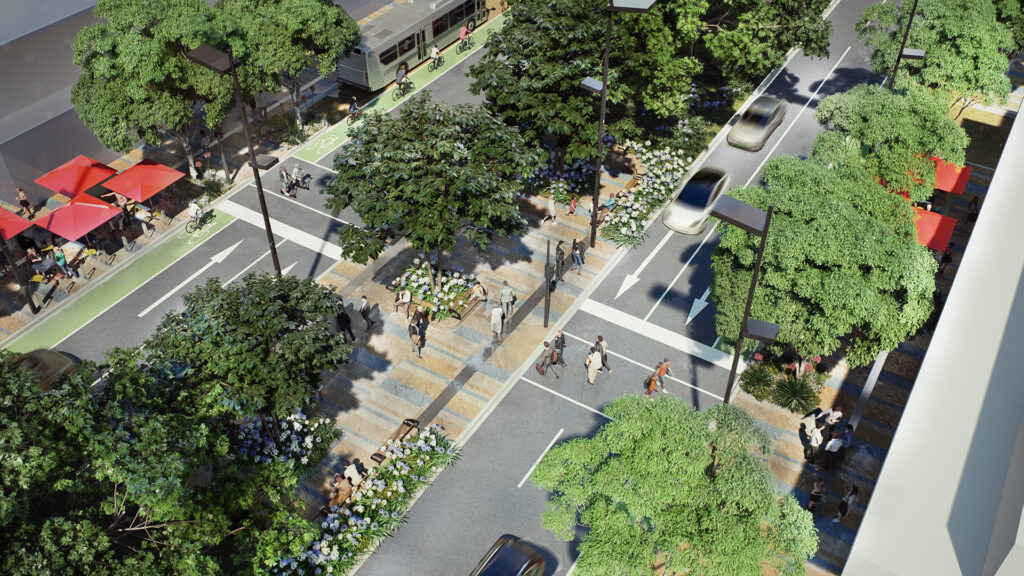
Our transport, urban design and landscape architecture teams work together to explore streetscape improvements that support walking, cycling, public transport, local businesses and community activity.

Stakeholder Engagement and Workshops

We facilitate collaborative workshops with councils, government agencies and other stakeholders to establish shared priorities, identify challenges and develop a coordinated vision for streets and places.

Urban Design Framework and Masterplan Support

We integrate Movement and Place assessments into broader urban design frameworks, precinct plans and streetscape masterplans, connecting transport decisions with land use planning and public realm outcomes.

Our People

Our Movement and Place team combines expertise across transport, planning, urban design and landscape architecture.

We work together to understand the different roles of streets and public spaces, helping clients make informed decisions that balance movement, accessibility and local character.

Send them an enquiry.

Movement and Place FAQs

What is Movement and Place?

Movement and Place is a framework that helps us make better decisions about our streets and shapes how we plan, design, develop, deliver and manage our transport networks and public spaces.

It recognises that streets are more than just movement corridors and that they are important parts of our communities that support connection, celebrate local culture and enable people to go about their daily lives. The framework helps us understand the different roles and needs of our streets and public spaces, ensuring they contribute to safe, inclusive, resilient and well-connected environments across Victoria.

What has changed in Movement and Place 2.0?

Movement and Place 2.0 is the Victorian Government’s updated framework, released in 2026.

It builds on the original 2019 framework with clearer street classifications, stronger consideration of place outcomes and improved integration with land use planning. It also introduces a Vision and Validate approach, helping practitioners establish future aspirations and assess options against those objectives.

At Ratio, we have extensive experience applying Movement and Place principles across metropolitan and regional Victoria. Our multidisciplinary team brings both the technical expertise and practical understanding required to apply the updated guidelines to real-world challenges.

How can Movement and Place improve activity centres?

Activity centres often need to accommodate competing demands, from vehicle and freight movements to pedestrian activity, outdoor dining, cycling and public transport.

Movement and Place assessments help councils understand these priorities and identify opportunities to improve safety, accessibility and the public realm. The findings can inform urban design frameworks, streetscape masterplans, transport strategies and future infrastructure investment.

What is a Movement and Place assessment?

A Movement and Place assessment examines how a street, precinct or transport network currently functions and how it could perform in the future. It considers transport movements, surrounding land uses, public space, safety and accessibility to identify opportunities for improvement. The process can include technical analysis, stakeholder workshops, street classifications, performance assessments and options development.

Who uses the Movement and Place 2.0 framework?

The framework is used by local councils, state government agencies, transport planners, engineers, urban designers and other professionals involved in planning streets and public spaces. It can support projects ranging from individual streetscape improvements to activity centre strategies and broader transport network planning.

How does Ratio approach Movement and Place assessments?

Ratio brings together transport planning, urban design, town planning and landscape architecture expertise to consider streets from multiple perspectives.

We work closely with clients and stakeholders to understand local challenges, establish priorities and develop practical options.

Our experience includes preparing Movement and Place assessments for councils across Victoria, spanning metropolitan Major Activity Centres, outer-suburban transport corridors, and regional and historic townships. Through this work, we have helped councils consider the relationship between transport movements, local activity and the public realm.