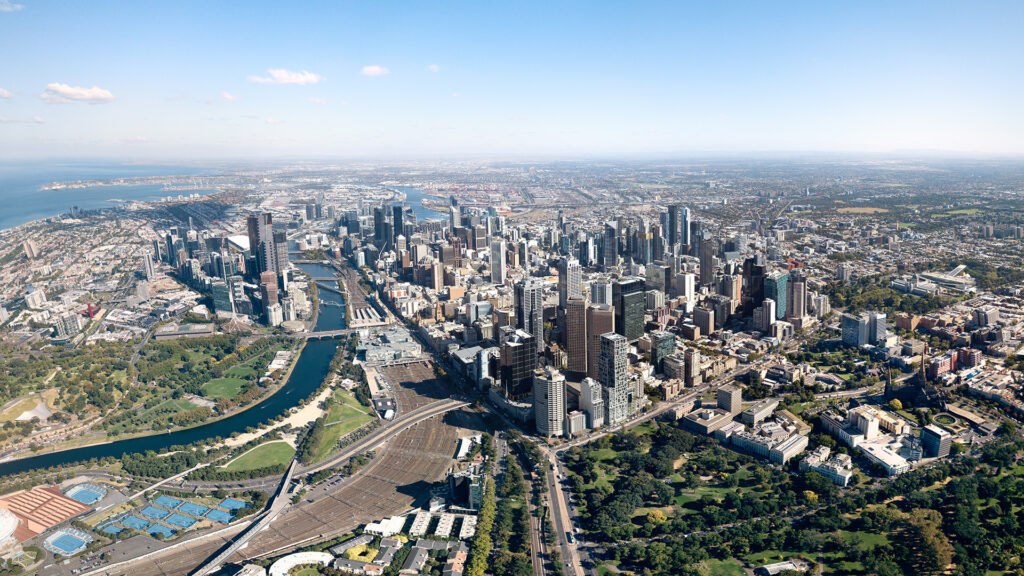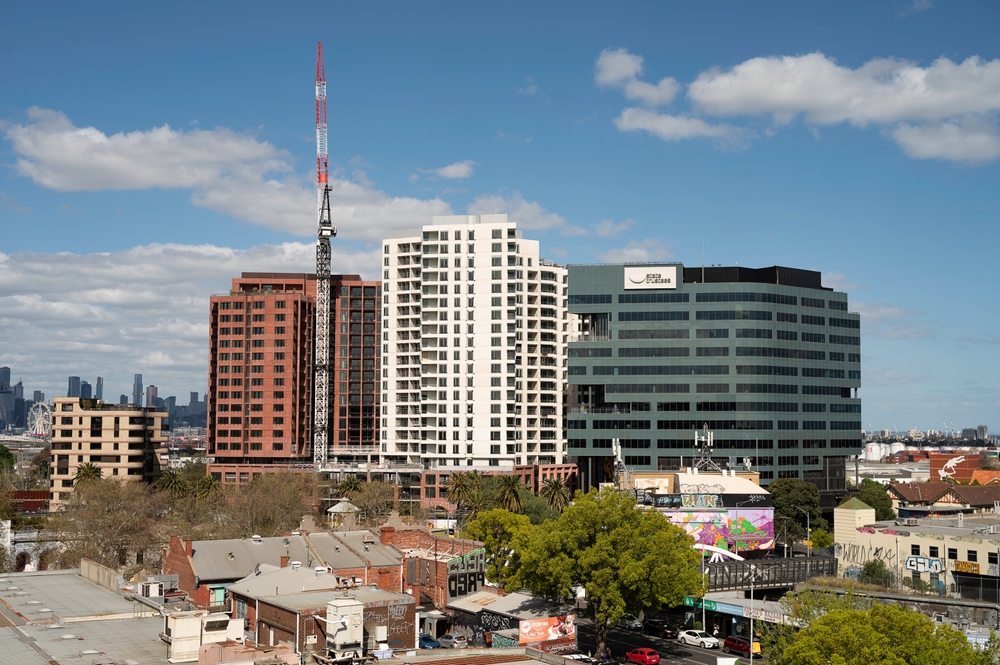



With new built form controls now in place for 60 activity centres as part of Melbourne’s Train and Tram Zone Activity Centres Program, it is time to consider what they will provide beyond the capacity for new housing. Will they create vibrant, attractive and enduring urban places where people want to live? Or will they simply add more density without creating better places?
The reforms provide greater certainty for housing delivery by establishing consistent built form expectations across designated activity centres. For developers, this reduces planning risk, and for government, it responds to the challenge of housing supply. But great cities are not created one compliant building at a time.
Good urban places emerge from a coherent vision for how streets, public spaces, movement networks and built form work together. They are shaped through integrated precinct planning, not simply through the cumulative outcome of individual development approvals. While the new controls establish a clearer statutory framework, they remain fundamentally reactive, providing a pathway for redevelopment when landowners choose to act rather than proactively coordinating how centres evolve. This raises an important question: can a reactive site-by-site approach ever produce the quality of urban environments the reforms aspire to achieve?
The controls regulate building envelopes and provide guidance on active frontages and protection of the public realm from shadow. However, many of the qualities that make activity centres successful extend far beyond individual development sites, including:
These 60 activity centres vary significantly in both their market conditions and existing urban environments. Some established inner-metropolitan centres already possess fine-grain retail, walkable streets, active public realms, strong public transport and an established sense of place. Others, particularly more car-oriented outer-suburban centres, are much further from providing the attractive, pedestrian-friendly environments that underpin successful urban intensification. New planning controls can create development opportunity, but they cannot create market demand or, on their own, transform a centre’s underlying urban structure.
This has important implications for how change will occur. In stronger markets, redevelopment may happen rapidly, creating opportunities for coordinated transformation if supported by timely public investment. In other centres, change is likely to be slower and more fragmented, with older buildings, isolated redevelopment sites and vacant land coexisting for years. Designing for this incremental evolution may prove just as important as designing for the ultimate vision.
Development contributions add another layer of complexity. Funding infrastructure to support more concentrated residential populations is necessary, but contribution requirements can materially affect project feasibility, particularly in marginal markets or complex redevelopment sites. Where viability is already finely balanced, additional costs may delay redevelopment, encourage value engineering or discourage the types of development the reforms seek to facilitate. Aligning planning policy, infrastructure funding and development economics will be critical to achieving both housing supply and quality urban outcomes.
There is a risk that certainty becomes confused with quality. Standardised controls can streamline assessment, but may encourage a compliance mindset where success is measured by satisfying numerical standards rather than contributing to the broader urban structure. The danger is that planning becomes focused on individual sites while losing sight of the centre as a whole.
This is not an argument against a focus on well-located activity centres for growth. However, if these centres are to become genuine mixed-use neighbourhoods rather than disconnected collections of apartment buildings, built form controls must be complemented by proactive city-making: coordinated investment in streets, parks, transport and community infrastructure, alongside stronger mechanisms for land assembly, infrastructure sequencing and precinct-scale urban design.
Density in itself does not create vitality; it simply creates the opportunity for it.
The success of the Activity Centres Program will ultimately depend not on the consistency of its controls, but on its ability to reconcile competing objectives of planning certainty, development feasibility and place quality. Achieving all three will be challenging, but critical if we are to deliver not only more housing, but better urban places.